
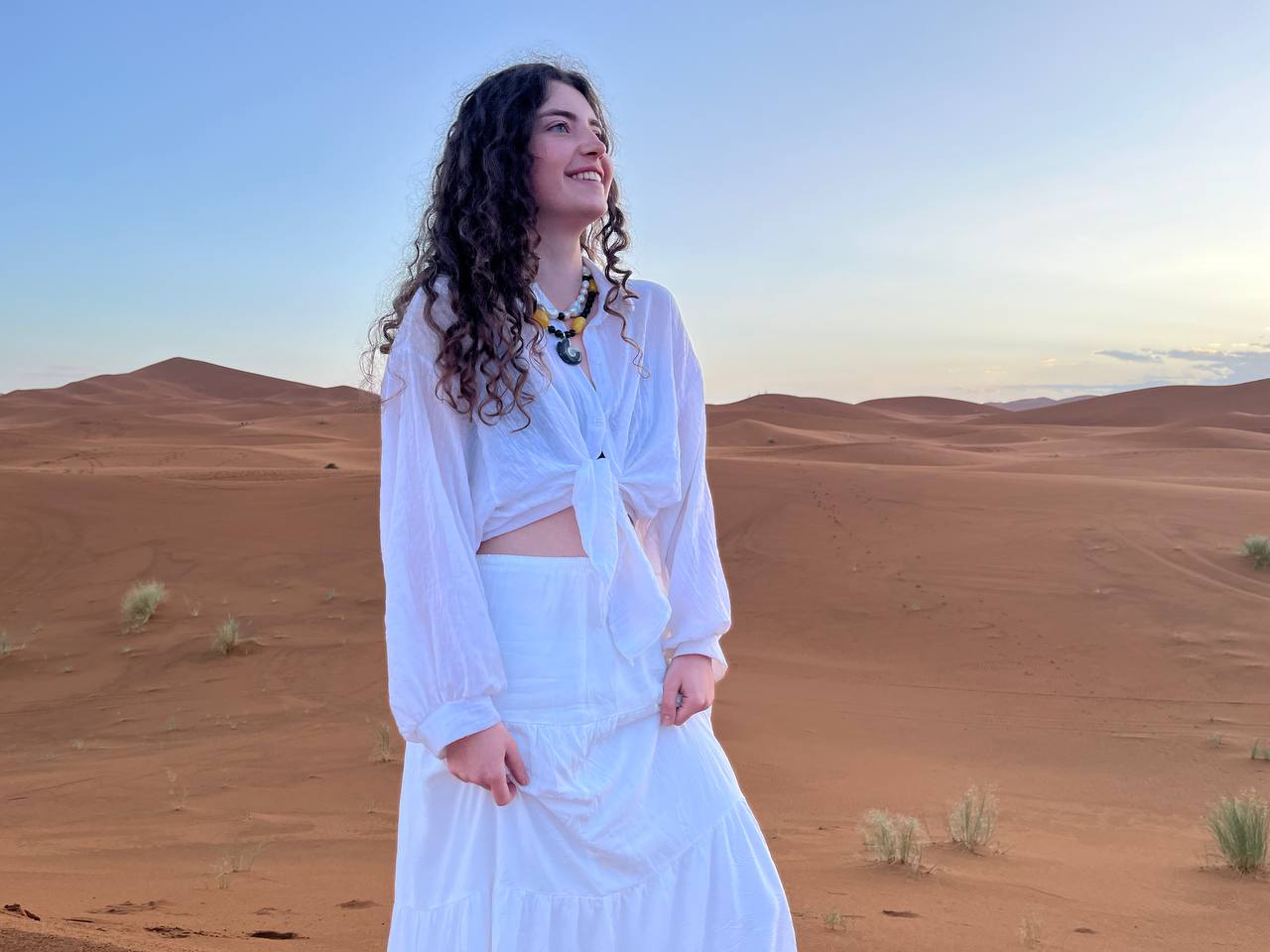
There is a kind of jewellery that does not begin with design.
It begins with something that already existed long before us.
Fossil jewellery is not created in the usual sense.
It is found, preserved, and carefully brought closer to the human body.
And this changes everything.
It begins with something that already existed long before us.
Fossil jewellery is not created in the usual sense.
It is found, preserved, and carefully brought closer to the human body.
And this changes everything.
What Is Fossil Jewellery?
Fossil jewellery is made from the preserved remains of ancient life:
These are not stones shaped to resemble something.
They are actual organisms that lived hundreds of millions of years ago, transformed by mineralisation and time.
When used in jewellery, they are not decorative elements.
They are the centre.
- ammonites — spiral shells from prehistoric oceans
- orthoceras — elongated marine fossils, older and more austere
- trilobites and other early forms of life
These are not stones shaped to resemble something.
They are actual organisms that lived hundreds of millions of years ago, transformed by mineralisation and time.
When used in jewellery, they are not decorative elements.
They are the centre.
Why People Wear Fossils
The reasons are rarely superficial.
They tend to fall into three quiet, distinct directions.
They tend to fall into three quiet, distinct directions.
1. A Connection to Deep Time
Some people are drawn to fossils because they represent something almost impossible to grasp: time that stretches far beyond human history.
Wearing a fossil is a way to carry that scale with you — not as an idea, but as a physical presence.
If you are new to this world, you may want to begin here:
→ What Is an Ammonite? Fossil Age, Meaning and Jewellery
Wearing a fossil is a way to carry that scale with you — not as an idea, but as a physical presence.
If you are new to this world, you may want to begin here:
→ What Is an Ammonite? Fossil Age, Meaning and Jewellery
2. A Preference for What Is Not Reproducible
Fossils cannot be manufactured.
Each one is shaped by:
No two are identical.
For those who seek objects that cannot be repeated or standardised, fossil jewellery offers something rare: uniqueness that is not designed — but inherited from nature.
Each one is shaped by:
- natural conditions
- geological pressure
- mineral composition
No two are identical.
For those who seek objects that cannot be repeated or standardised, fossil jewellery offers something rare: uniqueness that is not designed — but inherited from nature.
3. A Personal, Almost Quiet Relationship
Unlike traditional jewellery, fossils do not impose a clear meaning.
They do not say:
this is status
this is fashion
Instead, they leave space.
And in that space, people form their own connection:
They do not say:
this is status
this is fashion
Instead, they leave space.
And in that space, people form their own connection:
- some see structure and order
- others feel continuity
- some simply feel calm
Ammonite Jewellery
Among all fossil jewellery, ammonite jewellery is often the most recognisable.
The spiral form is both natural and precise, creating a sense of movement even in stillness.
Each ammonite carries:
To understand how these forms came to exist, you can explore:
→ How Ammonite Fossils Form
→ Ammonite Fossil Age: How Old Are Ammonites?
When set into a fossil necklace, the ammonite does not become an ornament.
It becomes a focal point — something the eye returns to, again and again.
The spiral form is both natural and precise, creating a sense of movement even in stillness.
Each ammonite carries:
- a unique geometry
- subtle variations in colour and mineralisation
- a distinct rhythm in its spiral
To understand how these forms came to exist, you can explore:
→ How Ammonite Fossils Form
→ Ammonite Fossil Age: How Old Are Ammonites?
When set into a fossil necklace, the ammonite does not become an ornament.
It becomes a focal point — something the eye returns to, again and again.
Orthoceras Jewellery
More minimal, more linear — orthoceras jewellery speaks differently.
These fossils are older than ammonites and shaped as long, tapered forms.
They do not draw attention through curves, but through direction.
Often chosen by those who prefer:
These fossils are older than ammonites and shaped as long, tapered forms.
They do not draw attention through curves, but through direction.
Often chosen by those who prefer:
- structure over ornament
- clarity over complexity
Fossil Necklaces and Wearing on the Body
A fossil necklace changes the way the object is experienced.
Placed against the body, the fossil becomes:
It is no longer something you observe from a distance.
It becomes something you carry.
Over time, many people stop thinking of it as jewellery at all — and begin to perceive it as a constant presence.
Placed against the body, the fossil becomes:
- warmer
- closer
- part of movement
It is no longer something you observe from a distance.
It becomes something you carry.
Over time, many people stop thinking of it as jewellery at all — and begin to perceive it as a constant presence.
Choosing a Piece
Choosing fossil jewellery is rarely about comparing options.
It is closer to noticing a difference: one piece feels neutral, another — specific.
If you have felt that distinction, you may want to continue here:
→ How to Choose an Ammonite that Feels Like Yours
It is closer to noticing a difference: one piece feels neutral, another — specific.
If you have felt that distinction, you may want to continue here:
→ How to Choose an Ammonite that Feels Like Yours
A Quiet Continuation
Fossil jewellery does not try to become part of your image.
It becomes part of your sense of time.
If you would like to explore pieces where these ancient forms are preserved and made wearable, you can enter here:
→ Fossil Necklaces
Each piece carries its own history — and remains open to becoming part of yours.
It becomes part of your sense of time.
If you would like to explore pieces where these ancient forms are preserved and made wearable, you can enter here:
→ Fossil Necklaces
Each piece carries its own history — and remains open to becoming part of yours.
