
The Sahara was not always a desert.
What now feels like stillness was once part of a moving, changing Earth.
To understand why there are fossils in the Sahara desert, you have to look beyond the sand — into deep geological time.
What now feels like stillness was once part of a moving, changing Earth.
To understand why there are fossils in the Sahara desert, you have to look beyond the sand — into deep geological time.
Why Are There Fossils in the Sahara Desert? (Short Answer)
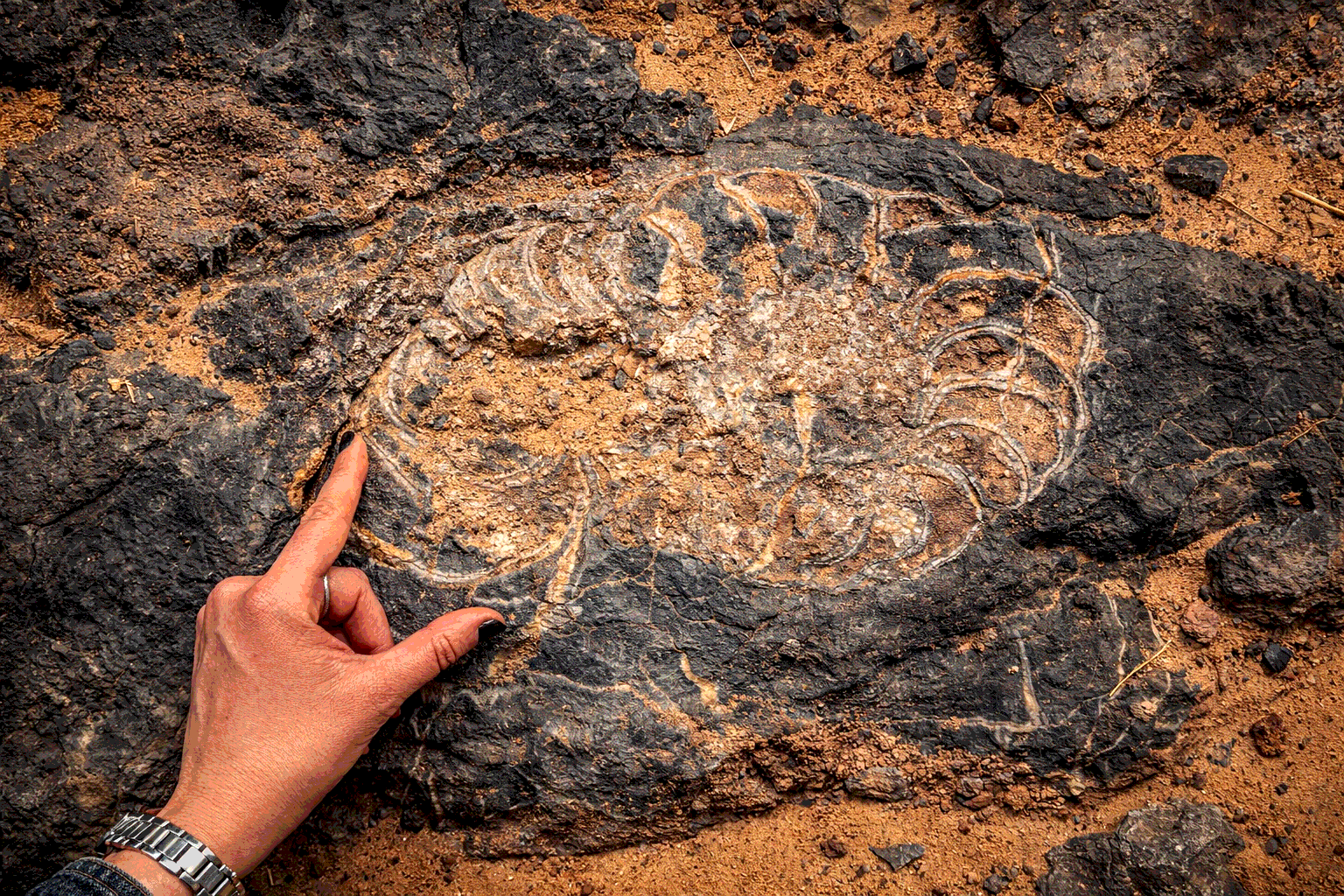
Fossils are found in the Sahara desert because this region was once covered by ancient shallow seas. Marine organisms lived, died, and were buried in sedimentary layers.
Over millions of years, tectonic shifts and erosion exposed these fossils on the surface.
Over millions of years, tectonic shifts and erosion exposed these fossils on the surface.
An Ancient Ocean Beneath the Land
Hundreds of millions of years ago, large parts of North Africa were covered by shallow seas.
During the Paleozoic Era, this region lay closer to the equator.
Warm waters supported abundant marine life:
— ammonites
— orthoceras
— trilobites
These ancient marine fossils in the Sahara are evidence of a time when desert landscapes did not exist.
Instead, this was part of a vast ocean system connected across early Earth.
During the Paleozoic Era, this region lay closer to the equator.
Warm waters supported abundant marine life:
— ammonites
— orthoceras
— trilobites
These ancient marine fossils in the Sahara are evidence of a time when desert landscapes did not exist.
Instead, this was part of a vast ocean system connected across early Earth.
Continents in Motion
The presence of Sahara desert fossils is directly linked to plate tectonics.
The land that is now the Sahara was once part of the supercontinent Gondwana.
Over millions of years:
— tectonic plates shifted
— sea levels rose and fell
— oceans advanced and retreated
These geological processes transformed seabeds into dry land.
But while the environment changed, the fossil record remained.
This is why fossils are found in the Sahara today.
The land that is now the Sahara was once part of the supercontinent Gondwana.
Over millions of years:
— tectonic plates shifted
— sea levels rose and fell
— oceans advanced and retreated
These geological processes transformed seabeds into dry land.
But while the environment changed, the fossil record remained.
This is why fossils are found in the Sahara today.
How Fossils Are Formed in Sahara
When marine organisms died, they sank to the seabed.
Sediment layers gradually covered them.
Over time:
— pressure increased
— minerals replaced organic material
— hard structures fossilized
This fossilization process preserved the original shapes within sedimentary rock.
If you want to explore this in more detail, you can read how ammonite fossils form and are preserved over time.
Sediment layers gradually covered them.
Over time:
— pressure increased
— minerals replaced organic material
— hard structures fossilized
This fossilization process preserved the original shapes within sedimentary rock.
If you want to explore this in more detail, you can read how ammonite fossils form and are preserved over time.
Why the Sahara Is Rich in Fossils
Not all regions preserve fossils equally.
The Sahara is one of the richest fossil locations in the world because of a rare combination of conditions:
1. Sedimentary geology
Extensive fossil-bearing rock layers (especially in regions like Tafilalt Basin)
2. Geological stability
Minimal disruption of fossil layers over millions of years
3. Natural erosion
Wind and sand gradually expose fossils at the surface
Because of this, fossil hunting in the Sahara often happens without deep excavation.
Fossils are revealed rather than discovered.
To see how fossils are found in the Sahara in real conditions, you can follow a real desert expedition and understand the process step by step.
The Sahara is one of the richest fossil locations in the world because of a rare combination of conditions:
1. Sedimentary geology
Extensive fossil-bearing rock layers (especially in regions like Tafilalt Basin)
2. Geological stability
Minimal disruption of fossil layers over millions of years
3. Natural erosion
Wind and sand gradually expose fossils at the surface
Because of this, fossil hunting in the Sahara often happens without deep excavation.
Fossils are revealed rather than discovered.
To see how fossils are found in the Sahara in real conditions, you can follow a real desert expedition and understand the process step by step.
Why This Matters Today
Fossils are not only scientific objects.
They are records of planetary transformation.
They show that:
— oceans can become deserts
— continents are not fixed
— time reshapes everything
Sahara fossils are not just remnants of life.
They are evidence of Earth in motion.
When you hold one, you are holding a fragment of a world that no longer exists — and yet still remains.
They are records of planetary transformation.
They show that:
— oceans can become deserts
— continents are not fixed
— time reshapes everything
Sahara fossils are not just remnants of life.
They are evidence of Earth in motion.
When you hold one, you are holding a fragment of a world that no longer exists — and yet still remains.
FAQ
Why are there fossils in the Sahara desert?
Because the Sahara was once covered by ancient seas where marine life lived and became preserved in sedimentary rock.
What types of fossils are found in the Sahara?
Common fossils include ammonites, orthoceras, trilobites, and other ancient marine organisms.
How old are Sahara fossils?
Many fossils found in the Sahara date back over 350–400 million years, primarily from the Paleozoic Era.
Why are fossils found on the surface in the desert?
Wind erosion removes upper layers of sand and rock, gradually exposing fossils without deep digging.
Where in the Sahara are fossils found?
Fossils are especially abundant in regions like the Tafilalt Basin in Morocco.
Because the Sahara was once covered by ancient seas where marine life lived and became preserved in sedimentary rock.
What types of fossils are found in the Sahara?
Common fossils include ammonites, orthoceras, trilobites, and other ancient marine organisms.
How old are Sahara fossils?
Many fossils found in the Sahara date back over 350–400 million years, primarily from the Paleozoic Era.
Why are fossils found on the surface in the desert?
Wind erosion removes upper layers of sand and rock, gradually exposing fossils without deep digging.
Where in the Sahara are fossils found?
Fossils are especially abundant in regions like the Tafilalt Basin in Morocco.
