
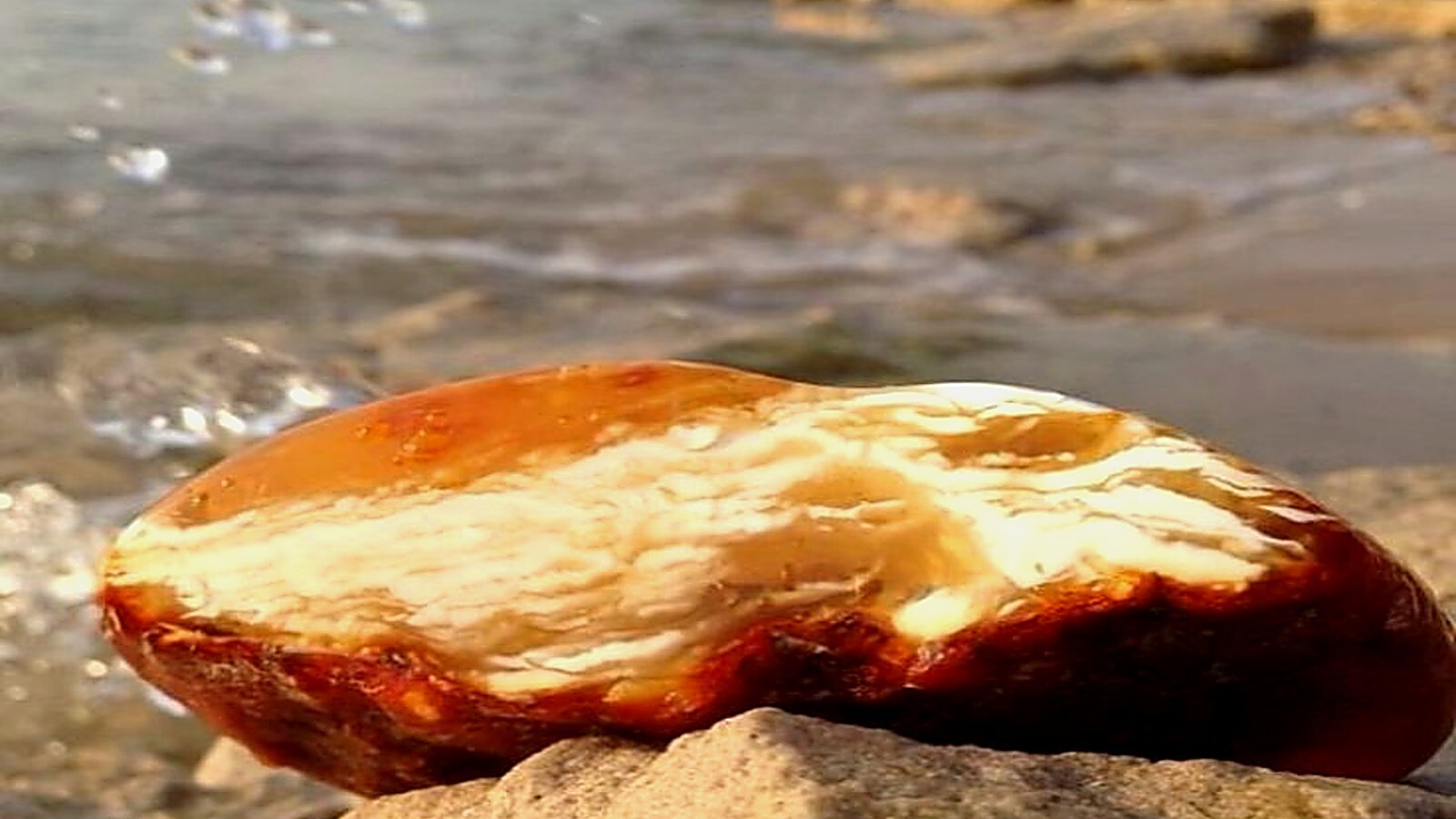
Amber does not look like a typical gemstone.
It is lighter.
Warmer.
Sometimes imperfect.
But before asking about its value, it helps to understand what amber actually is and how it relates to fossils.
→ Is Amber a Fossil? What Amber Really Is
Some pieces of amber are valued more than precious stones.
So the question is natural: Is amber valuable?
The answer depends on more than appearance.
It depends on time, rarity, and what the amber has preserved.
It is lighter.
Warmer.
Sometimes imperfect.
But before asking about its value, it helps to understand what amber actually is and how it relates to fossils.
→ Is Amber a Fossil? What Amber Really Is
Some pieces of amber are valued more than precious stones.
So the question is natural: Is amber valuable?
The answer depends on more than appearance.
It depends on time, rarity, and what the amber has preserved.
Is Amber Valuable?
Yes — amber can be valuable.
But unlike diamonds or sapphires, its value is not defined by strict grading systems.
Instead, amber is evaluated based on:
— rarity
— preservation
— inclusions
— size
— origin
Two pieces of amber can look similar — yet differ in value by hundreds or thousands of dollars.
This is because amber is not evaluated like a mineral.
Its value depends on how time has preserved it.
To understand how different forms of ancient life are preserved — not only in amber, but in stone you can explore:
→ Types of Fossils: A Visual and Scientific Guide
But unlike diamonds or sapphires, its value is not defined by strict grading systems.
Instead, amber is evaluated based on:
— rarity
— preservation
— inclusions
— size
— origin
Two pieces of amber can look similar — yet differ in value by hundreds or thousands of dollars.
This is because amber is not evaluated like a mineral.
Its value depends on how time has preserved it.
To understand how different forms of ancient life are preserved — not only in amber, but in stone you can explore:
→ Types of Fossils: A Visual and Scientific Guide
What Determines Amber Value
1. Inclusions (What Is Inside)
The most valuable amber often contains preserved life.
Insects, plants, or even microscopic organisms can dramatically increase value.
A simple piece of amber may be decorative.
But amber with a well-preserved insect becomes a scientific artifact.
Rare inclusions can multiply the price many times.
Insects, plants, or even microscopic organisms can dramatically increase value.
A simple piece of amber may be decorative.
But amber with a well-preserved insect becomes a scientific artifact.
Rare inclusions can multiply the price many times.
2. Clarity and Transparency
Clear amber is generally more valuable than opaque material.
Transparency allows light to pass through — revealing depth, structure, and inclusions.
However, some opaque varieties (like milky amber) are valued for their unique texture and color.
Transparency allows light to pass through — revealing depth, structure, and inclusions.
However, some opaque varieties (like milky amber) are valued for their unique texture and color.
3. Colour
Amber appears in a wide range of colours:
— honey
— golden
— cognac
— green
— rare blue
Unusual colours are typically more valuable.
Blue amber, for example, is extremely rare and highly sought after.
— honey
— golden
— cognac
— green
— rare blue
Unusual colours are typically more valuable.
Blue amber, for example, is extremely rare and highly sought after.
4. Size
Larger pieces of amber are rarer.
Because amber forms from resin, large uninterrupted pieces are uncommon.
The bigger is the piece — the higher is the potential value.
Because amber forms from resin, large uninterrupted pieces are uncommon.
The bigger is the piece — the higher is the potential value.
5. Origin
The geographic origin of amber matters.
Some of the most well-known sources include:
— Baltic amber (Europe)
— Dominican amber (Caribbean)
— Burmese amber (Myanmar)
Each region produces amber with distinct characteristics.
Some of the most well-known sources include:
— Baltic amber (Europe)
— Dominican amber (Caribbean)
— Burmese amber (Myanmar)
Each region produces amber with distinct characteristics.
Why Some Amber Is More Valuable Than Gemstones
Amber is not just a material.
It is a record of life.
While gemstones are formed through geological processes, amber originates from biological ones.
It preserves:
— ecosystems
— moments
— interactions between species
In rare cases, a single piece of amber can hold a scene from millions of years ago.
That is why collectors, scientists, and designers value it so highly.
It is a record of life.
While gemstones are formed through geological processes, amber originates from biological ones.
It preserves:
— ecosystems
— moments
— interactions between species
In rare cases, a single piece of amber can hold a scene from millions of years ago.
That is why collectors, scientists, and designers value it so highly.
Amber in Jewellery
In jewellery, amber carries a different kind of value.
It is not about perfection.
It is about presence.
Each piece is:
— unique
— shaped by natural processes
— connected to ancient life
In creations by Ampulla Temporis, materials like amber are not selected for uniformity, but for meaning — fragments of time that can be worn and experienced .
It is not about perfection.
It is about presence.
Each piece is:
— unique
— shaped by natural processes
— connected to ancient life
In creations by Ampulla Temporis, materials like amber are not selected for uniformity, but for meaning — fragments of time that can be worn and experienced .
Conclusion
So, is amber valuable? Yes — but not in a conventional way.
Its value is not only in clarity or color.
It is in what it carries.
Some stones reflect light.
Amber reflects time.
Its value is not only in clarity or color.
It is in what it carries.
Some stones reflect light.
Amber reflects time.
