
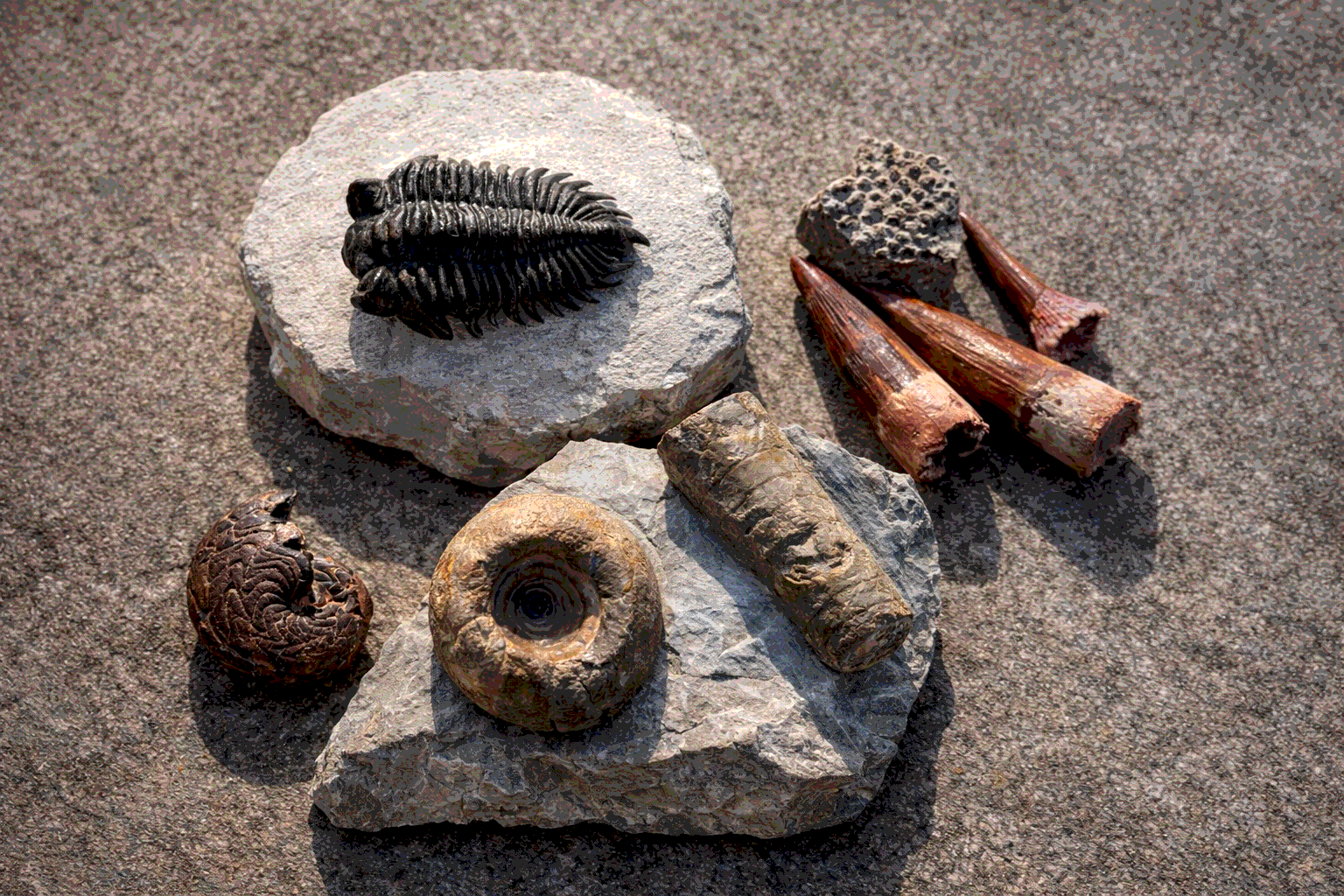
A fossil is the preserved remains, imprint, or trace of a once-living organism, usually found in sedimentary rock and formed over millions of years.
Introduction
At first glance, a fossil may look like a stone.
But it is not simply a mineral form.
It is a moment of life that did not disappear — only changed its state.
Some fossils are hundreds of millions of years old.
They carry the memory of oceans that no longer exist and creatures that no longer move.
To understand fossils is to understand how time can become visible.
But it is not simply a mineral form.
It is a moment of life that did not disappear — only changed its state.
Some fossils are hundreds of millions of years old.
They carry the memory of oceans that no longer exist and creatures that no longer move.
To understand fossils is to understand how time can become visible.
What Is a Fossil? (Full Definition)
A fossil is any preserved evidence of past life.
This can include:
Most fossils are formed when an organism is buried under layers of sediment.
Over time, pressure and minerals transform the remains into stone.
This process can take thousands to hundreds of millions of years.
This can include:
- the actual remains of an organism (bones, shells, teeth)
- imprints left in soft sediment
- traces of activity (footprints, burrows)
Most fossils are formed when an organism is buried under layers of sediment.
Over time, pressure and minerals transform the remains into stone.
This process can take thousands to hundreds of millions of years.
Types of Fossils
Fossils are not all the same. They form in different ways depending on conditions, materials, and time.
1. Body Fossils
These are the physical remains of organisms.
Examples:
This is the most common type used in collections and jewellery.
Examples:
- bones of dinosaurs
- shells of ammonites
- teeth of ancient animals
This is the most common type used in collections and jewellery.
2. Trace Fossils
These are signs of activity rather than the organism itself.
Examples:
They show how ancient life behaved, not just how it looked.
Examples:
- footprints
- burrows
- feeding marks
They show how ancient life behaved, not just how it looked.
3. Mold and Cast Fossils
When an organism dissolves but leaves its shape in the surrounding rock.
- Mold — a hollow impression
- Cast — a filled version of that impression
4. Carbon Fossils
A thin carbon layer remains after organic material breaks down.
Often found in:
Often found in:
- plants
- soft-bodied organisms
5. Amber Fossils
Organisms preserved in tree resin that hardened over time.
Examples:
These fossils can preserve extremely fine details.
Examples:
- insects
- plant fragments
These fossils can preserve extremely fine details.
How Do Fossils Form? (Simple Explanation
Fossil formation is rare. Most living things disappear without a trace.
For a fossil to form, several conditions must align:
Over time, layers of sediment turn into rock.
The organism becomes part of that rock.
If you want a detailed explanation of each stage, read:
→ How Do Fossils Form? Step-by-Step Process Explained
For a fossil to form, several conditions must align:
- The organism dies
- It is quickly buried (sand, mud, sediment)
- Oxygen is limited (prevents decay)
- Minerals gradually replace organic material
Over time, layers of sediment turn into rock.
The organism becomes part of that rock.
If you want a detailed explanation of each stage, read:
→ How Do Fossils Form? Step-by-Step Process Explained
Examples of Fossils
Some of the most well-known fossils include:
Each fossil tells a different story about life on Earth.
- Ammonites — spiral marine creatures related to modern squid
- Trilobites — ancient marine arthropods
- Dinosaur bones and teeth
- Plant fossils — leaves, wood, pollen
Each fossil tells a different story about life on Earth.
How Old Are Fossils?
Fossils can range from:
The oldest known fossils are microscopic life forms found in ancient rocks.
Ammonites, for example, lived between 400 and 66 million years ago.
- a few hundreds of thousands years old
- over 3.5 billion years old
The oldest known fossils are microscopic life forms found in ancient rocks.
Ammonites, for example, lived between 400 and 66 million years ago.
Where Are Fossils Found?
Fossils are usually found in sedimentary rocks, such as:
They are often discovered in places that were once:
This is why fossils are found in deserts — those areas were once underwater.
- limestone
- sandstone
- shale
They are often discovered in places that were once:
- oceans
- lakes
- riverbeds
This is why fossils are found in deserts — those areas were once underwater.
Why Fossils Matter
Fossils are not just objects.
They are one of the main ways scientists understand:
Without fossils, most of Earth’s history would remain invisible.
They are one of the main ways scientists understand:
- evolution
- ancient ecosystems
- climate changes
- extinction events
Without fossils, most of Earth’s history would remain invisible.
Conclusion
A fossil is not simply something old.
It is a form of preserved time — a moment when life paused, and the Earth decided to keep it.
What we hold today as stone was once movement, breath, and presence.
And in that transformation, something rare happened: time did not erase — it recorded.
It is a form of preserved time — a moment when life paused, and the Earth decided to keep it.
What we hold today as stone was once movement, breath, and presence.
And in that transformation, something rare happened: time did not erase — it recorded.
Frequently Asked Questions
What is a fossil in simple words?
A fossil is a preserved trace or remains of a living organism from the past, usually found in rock. It can be a bone, shell, imprint, or even a footprint.
How are fossils formed?
Fossils form when a plant or animal is buried under sediment. Over time, pressure and minerals replace the organic material, turning it into stone.
How old are fossils?
Classical fossils can be tens of thousands to billions of years old. The oldest known fossils are over 3.5 billion years old.
Where are fossils usually found?
Fossils are most often found in sedimentary rocks such as limestone, sandstone, and shale. These rocks form in environments like oceans, lakes, and rivers.
Why are fossils found in deserts?
Many deserts were once covered by oceans or lakes. Over millions of years, water disappeared, but fossils remained in the dry landscape.
What types of fossils exist?
There are several types of fossils, including body fossils (bones and shells), trace fossils (footprints), mold and cast fossils, carbon fossils, and amber fossils.
Are all fossils bones?
No, fossils are not only bones. They can also be shells, plants, imprints, or traces of activity like footprints.
Can fossils still be found today?
Yes, fossils are still being discovered around the world, especially in deserts, cliffs, and areas with exposed sedimentary rock.
Why are fossils important?
Fossils help scientists understand how life evolved, what ancient environments looked like, and how species changed over time.
What is the most common fossil?
Marine fossils, such as shells and ammonites, are among the most common because oceans covered much of the Earth in the past.
